Air America, the liberal talk-radio network that helped boost the careers of Al Franken and Rachel Maddow, said Thursday that it was declaring bankruptcy and going off the air. . .
It was troubled almost from the start. The company had difficulty lining up affiliates and attracting a sizable audience. It filed for Chapter 11 bankruptcy-court protection just 30 months after its inception and was resold to an investor group in early 2007 for $4.25 million. . .
Since last summer, Air America has been heard in the Washington [D.C.] area on WZAA (1050 AM). Its audience has been so small that Arbitron, which compiles radio ratings, was unable to detect any listeners for WZAA during several weeks in December.
Of course, it required various frauds for Air America to survive as long as it did.
The Supreme Court’s decision in Citizens United v. FEC is a big victory for free speech. Unfortunately, it was a 5-4 decision, with the “liberal” justices opposing free speech. (How badly screwed up is our political nomenclature when the preceding sentence makes sense?)
The liberals complain that corporations are not real people, and thus are not entitled to free speech rights. Of course, no one says that a corporation is a real person: they can’t vote, serve on juries, etc. But who exactly, do the “liberals” think make up a corporation? Androids? Ghosts? Aliens? No, corporations are made up of people, just as are all other organizations. The “liberal” position is that a person should go to prison for speaking about a candidate during an election, if that speech was part of the activities of a corporation. Make no mistake, the “liberals” want to send real people to prison for engaging in speech.
But only certain people. The “liberals” want to criminalize the speech of some but not others: If you’re part of a sole proprietorship or a partnership, you’re good. If you’re an individual who extracted his wealth from a corporation, you’re good. If you’re part of certain corporations (those that have a media component), you’re good. But certain people that work for certain organizations (i.e., corporations without a media component) should go to jail for speaking. And keep in mind, it’s not just big for-profit corporations, it’s also (as the court’s opinion notes) groups like the Sierra Club, NRA, or ACLU whose members could be sent to jail for speaking about a candidate during an election.
The “liberals” also complain about how radical the decision is. In fact, the decision merely reverts to the precedent that was in play until fairly recently. For example, in its 1978 First National Bank of Boston v. Bellotti decision, the court ruled (as quoted in Citizens United):
We thus find no support in the First . . . Amendment, or in the decisions of this Court, for the proposition that speech that otherwise would be within the protection of the First Amendment loses that protection simply because its source is a corporation that cannot prove, to the satisfaction of a court, a material effect on its business or property. . .
In the realm of protected speech, the legislature is constitutionally disqualified from dictating the subjects about which persons may speak and the speakers who may address a public issue.
It was not until 1990 that the free-speech train went off the rails in the Austin v. Michigan Chamber of Commerce decision. That decision invented a flimsy new government interest (antidistortion) that the Obama administration didn’t even bother to defend. Even more bizarrely, Austin somehow found that a complete ban on political speech by corporations was narrowly tailored to address the antidistortion interest. Citizens United is a good decision, and one that never should have been necessary.
One cannot help but think that the real reason the left is so upset about Citizens United is that they think it will hurt them. In that regard, I think that they are worrying for nothing, for two reasons:
First, Citizens United unshackles labor unions in addition to corporations. True, corporations have more money, but labor unions are much more political. We can expect that labor unions will use their new freedom much more than corporations typically will.
Second, large corporations obviously have more money to throw around than small corporations, and while small business overwhelmingly tends to support small government (and therefore the GOP), big business often supports big government. While excessive regulation strangles small businesses, large businesses have the resources to survive it. In fact, large businesses often lobby for regulation because it drives out their smaller and more nimble competition. Plus, businesses love it when the government buys things with tax money that individuals weren’t interested in buying on their own.
So I don’t think that the post-Citizens-United landscape favors the GOP as much as the left fears it does. In fact, I think it favors the Democrats in the long term. In the short term, however, the Democrats have been so flagrantly anti-business that they probably will take a hit. They deserve it.
Finally, one prediction. Citizens United exacerbates an already strange political situation in which the politicians have the weakest voice in politics. Fund-raising limitations put severe burdens on politicians and parties that others who spend their own money don’t have. Since politicians make the rules, I would be surprised to see them remain disadvantaged for long. Expect very soon to see proposals to raise or even to remove limits on campaign fund raising.
There’s a lot of talk about the Senate rules right now. Without their 60-vote supermajority, Democrats want to use reconciliation to pass a health care bill. The problem is that under Senate rules reconciliation can be used for budget items only. That means no individual mandate, no requirement that insurers ignore pre-existing conditions, etc. Any bill that comes through reconciliation will be a ghost of what the Democrats want. (Keith Hennessey looks at the possibilities here.)
Or will it? What all this analysis ignores is the fact that the Democrats can change the rules any time they want. Yes, it’s true that it takes a 2/3 supermajority to change the rules officially, but the majority has a sleazier tactic at its disposal: it can simply ignore them.
Here’s how it works. The chair rules that the Byrd rule (that’s the rule governing reconciliation) doesn’t apply to the health care bill. This is clearly false, but it doesn’t matter. A ruling from the chair is sustained by a simple majority. Done. (There’s a bit of parliamentary maneuvering that is required, but in the end it takes a majority.)
In fact, they needn’t be so narrow about it. They can simply rule that cutting off debate requires only 51 votes. This is what Republicans proposed to do in 2005 in regards to judicial nominations. It is also what the Democrats did in 1975 to lower the majority required to end a filibuster from 67 to 60 votes. (At the time, Democrats had 62 votes.)
In short, although it takes 67 votes to change the rules, it only takes 51 votes to break them. The Democrats can pass health care reform if they choose. There would certainly be public outrage if they did (not just over the bill, but over the flagrant disregard of the Senate’s rules), but Democrats might decide it’s worth it.
One of the media’s tricks for spreading misinformation is to quote someone uncritically who is telling a lie. The story may be technically truthful, if the person really did say it. Nevertheless, if the lie is reported without any rebuttal or caution that it might not be true, the story gives the impression that the lie is true, particularly when the lie is woven into the broader narrative of the story. That’s dishonest.
Indeed, my definition of “lie” is to make any statement with the deliberate intention to cause the audience to believe something that the teller thinks is false. By that definition, Bob Kerrey and the New York Times lied about Scott Brown:
“If he’s running against 60 votes and wins, that is not good,” said Bob Kerrey, a former Democratic senator from Nebraska. “It says that in Massachusetts, they are willing to elect a guy who doesn’t believe in evolution just to keep the Democrats from having 60 votes.”
“Scott Brown believes in evolution but in the case of Bob Kerrey he’s willing to make an exception.”
Here’s where the story gets interesting. The NYT revised its story to remove the portion of the quote that referred to evolution. But it did so without noting a correction.
ASIDE: As of today, the original story still appears at the Seattle Times, with a byline indicating the story is from the New York Times. Also, Patterico has a screenshot of the Google cache.
What justification could the NYT have for airbrushing the story without a correction? If Kerrey didn’t really make the remark (the likelihood of this seems vanishingly small), then they’ve libeled Kerrey and they need to run a retraction. Much more likely, the NYT was being called on the lie and pulled it. Leaving out the evolution bit would have been the right thing to do in the first place, but they didn’t do that, and now it’s out there. Once they’d helped to spread misinformation, the NYT needed to issue a correction.
So why didn’t they? I can only see one explanation: Issuing a correction would draw attention to the fact that Democrats were lying about Scott Brown. Obviously, the NYT wanted Martha Coakley to win. That’s why they ran the lie in the first place, and if they ran the correction, the whole matter would have been a net positive for Brown. From the NYT’s perspective, that was unacceptable. Better just to leave the lie out there, and take the rip from people who hate the NYT already.
POSTSCRIPT: We can now look forward to Clark Hoyt’s column on the matter, in which Hoyt will defend the paper (as he nearly always does) writing that although they made an error in judgement, that error was not the result of bias.
A new PPP poll shows that Mike Huckabee and Mitt Romney are each tied with President Obama in a hypothetical matchup. Huckabee has an insignificant lead over Obama; Romney trails insignificantly. The only Republican that Obama would clearly beat in the poll is Sarah Palin.
Republican Scott Brown’s victory in the Massachusetts Senate race was lifted by strong support from union households, in a sign of trouble for President Barack Obama and Democrats who are counting on union support in the 2010 midterm elections.
A poll conducted on behalf of the AFL-CIO found that 49% of Massachusetts union households supported Mr. Brown in Tuesday’s voting, while 46% supported Democrat Martha Coakley. The poll conducted by Hart Research Associates surveyed 810 voters.
Some of this has to be the unique appeal of Scott Brown and the unique unappeal of Martha Coakley, but that can’t be all of it. If the Democrats have moved left of the unions, we truly are due for a correction.
Sec. 3. Closure of Detention Facilities at Guantánamo. The detention facilities at Guantánamo for individuals covered by this order shall be closed as soon as practicable, and no later than 1 year from the date of this order. . .
BARACK OBAMA
THE WHITE HOUSE,
January 22, 2009.
The credulous press reported this as a done deal (e.g., “Obama Upends Bush, Will Close Guantanamo“) despite the administration having no plan to carry it out. They still have no plan to carry it out.
In the wake of Republican Scott Brown’s victory in Tuesday’s U.S. Senate election in Massachusetts, the majority of Americans (55%) favor Congress’ putting the brakes on its current healthcare reform efforts and considering alternatives that can obtain more Republican support. Four in 10 Americans (39%) would rather have House and Senate Democrats continue to try to pass the bill currently being negotiated in conference committee.
Ramesh Ponnuru has a good analysis of the problem of pre-existing conditions:
The political paradox of pre-existing conditions is that the ban is popular but can’t be accomplished in a popular way. The ban requires all kinds of other government interventions to sustain it. For example, you have to force everyone to buy insurance: Otherwise people would wait until they got sick and buy policies knowing that the insurance companies could not turn them down or charge them extra. You have to define what insurance policies have to cover, or else that mandate can be evaded. You have to offer subsidies for people who can’t afford the insurance policies that you’ve just made more expensive. Pretty soon you’ve got Obamacare.
It seems to me that the problem of pre-existing conditions arises from a pecularity of health insurance. If you get into a car accident just before your insurance expires, the insurance is still on the hook for the cost. Shouldn’t health insurance work the same way? If you have a problem before you switch insurance, shouldn’t your old insurer cover it?
I’ve never read anyone else suggest this, so maybe I’m being naive, but I don’t see how.
Food handouts were shut off Tuesday to thousands of people at a tent city here when the main U.S. aid agency said the Army should not be distributing the packages.
It was not known whether the action reflected a high-level policy decision at the U.S. Agency for International Development (USAID) or confusion in a city where dozens of entities are involved in aid efforts.
“We are not supposed to get rations unless approved by AID,” Maj. Larry Jordan said.
Jordan said that approval was revoked; water was not included in the USAID decision, so the troops continued to hand out bottles of water. The State Department and USAID did not respond to requests for comment.
There needs to be an investigation of what jackass gave this order. I want to see that guy forced to say into the cameras that he’d rather see people starve than be fed by the military.
As I predicted, Nancy Pelosi has concluded she cannot get the Senate health bill through the House. The two-bill scheme (pass the Senate bill and promise another bill to fix it) doesn’t look feasible either. We’ll see if the Democrats decide to “go nuclear”.
It is a mark of the degree of political malpractice the Democrats have been guilty of over the past year, of the degree of their overreach and recklessness, that being left with 59 senators—a huge majority by any measure, and the same majority they had when Obama was inaugurated a year ago—is now somehow enough to make it seem as though they are powerless and is likely to kill the core (and almost the entirety) of their domestic agenda, and leave them rudderless and reeling.
They are of course not in fact powerless at all. But they have adopted an agenda that only a supermajority could pass. . . They have made it impossible for themselves to change course without a massive loss of face and of political capital. But however costly, that change will now need to come.
If Scott Brown wins today (86% on Intrade), the Democrats have indicated that they will try to pass the Senate bill in the House.
That will be hard. In November, the House passed the Democratic bill by a razor-thin 220-215 margin. Bart Stupak (D-MI) and this morning Joseph Cao (R-LA) have vowed to oppose the Senate bill due to its funding of abortion. That leaves the vote at 218-217, if no other votes change.
Can the House Democrats get every single vote that they had for their own bill to vote for the Senate bill as well? Here’s what has to happen: Every single member of the pro-life Democrat coalition other than Stupak himself caves. Not a single progressive follows through on their threat to vote against a bill without a public option. (Okay, that sounds pretty likely.) Not a single vote is swayed by union opposition to the “Cadillac tax”. And, not a single blue dog gets scared straight by the spectacle of a Republican winning the Massachusetts Senate race despite appearances by Bill Clinton and Barack Obama.
Scott Brown has won a moral victory already, but I’m starting to believe he could carry off an actual win. Several last minute polls give him a measurable lead: Politico/InsiderAdvantage +9, ARG +7, PPP +5, Suffolk +4, among others. Only the Daily Kos poll and the “leaked” Coakley internal poll fail to give Brown the lead. Stuart Rothenberg calls it “lean takeover”. And Brown is trading at 77 on Intrade.
The Boston Globe has not seen fit to report Martha Coakley’s preposterous allegation that Curt Schilling is a Yankees fan, according to a search at Boston.com:
0 results for “coakley schilling” from Boston Globe
Stories published between Jan 14, 2010 and Dec 31, 2010
Sorry, your search did not match anything in our database.
UPDATE: I think Coakley made the remark on January 14. Hence the search.
Martha Coakley seems to think “he’s a Yankee fan” is a generic insult she can use on anyone. Against Rudy Giuliani it works. Against Curt Schilling, the legendary Red Sox pitcher, not so much.
It can be dangerous to wade into a topic you know nothing about. It’s doubly dangerous when the topic is sports, where so many ordinary people are knowledgeable, and care much more than they should.
A new poll taken Thursday evening for Pajamas Media by CrossTarget – an Alexandria VA survey research firm – shows Scott Brown, a Republican, leading Martha Coakley, a Democrat, by 15.4% in Tuesday’s special election for the open Massachusetts US Senate seat. The poll of 946 likely voters was conducted by telephone using interactive voice technology (IVR) and has a margin of error of +/- 3.19%.
This poll is as close as you can get to a controlled experiment in politics:
New polling released yesterday and today by Public Policy Polling (D) provides some solid, empirical evidence that a vote against the health care bill may be the better bet for swing-seat Democrats. Or at least, that seems to be the message for freshman Rep. Larry Kissell (D-NC), who voted against the bill.
The new polls show that Kissell easily leads several potential Republican opponents, by margins of 14-18 points. He also leads a potential Democratic primary challenger, 2002 nominee Chris Kouri, by 49%-15%. But a close look at the polls shows just how people think he voted on the bill — and how this could be affecting their decisions about him.
It turns out that a 44% plurality of the likely general election electorate falsely believe that Kissell voted for the bill, with only 29% giving the correct answer that he voted against it, and 28% are unsure. . . I asked PPP for some customized cross-tabs — which reveal that among people who think he voted for it the race is very close, with a landslide lead among the folks who think he voted against it.
This is very revealing. It shows two results for the exact same guy: If he voted for the bill, he’s tied. If he voted against the bill, he wins by a landslide.
The big sticking point between the House and Senate health care bills, we’re told, is the “Cadillac tax” on (supposedly) too-expensive health care plans. The House didn’t have such a tax, because it was strongly opposed by labor unions that have such plans.
Negotiators have reportedly come to an agreement, which seems obvious in retrospect. They are simply going to exempt unions from paying the tax. Problem solved! (More precisely, unions don’t have to pay the tax until 2018, but we can expect that date to be extended in perpetuity.)
It’s so blatantly corrupt I can’t even believe it. The Democrats are going to have to face a backlash over this, aren’t they? Aren’t they?
Q: Right, if you are a Catholic, and believe what the Pope teaches that any form of birth control is a sin . . . ah you don’t want to do that.
Martha Coakley: No we have a separation of church and state Ken. Let’s be clear.
Q: In the emergency room you still have your religious freedom.
Martha Coakley: The law says that people are allowed to have that. You can have religious freedom but you probably shouldn’t work in the emergency room.
Wow. (Cue to 9:30 here for the audio.) Also, when asked if health care professionals should be able to refuse to perform abortions as conscientious objectors, she says no, referring to abortion as a service that is “required under the law and under Roe vs. Wade”. (Cue to 9:00.)
And with that, Coakley is officially an extremist.
Business Week is reporting an alarming development. The Obama administration is looking for ways to push investors into retirement annuities rather than other securities:
U.S. investors oppose federal initiatives that would force them to give up control over their 401(k) accounts, the Investment Company Institute said. Seven in 10 U.S. households object to the idea of the government requiring retirees to convert part of their savings into annuities guaranteeing a steady payment for life, according to an institute-funded report today. . .
The U.S. Treasury and Labor Departments will ask for public comment as soon as next week on ways to promote the conversion of 401(k) savings and Individual Retirement Accounts into annuities or other steady payment streams, according to Assistant Labor Secretary Phyllis C. Borzi and Deputy Assistant Treasury Secretary Mark Iwry, who are spearheading the effort. . .
Some lawmakers have questioned the public-policy value of the tax benefits for people investing in retirement accounts, the ICI said in a report today. . . Senator Herb Kohl, chairman of the Senate Special Committee on Aging, proposed legislation on Dec. 16 to require fund companies to do more to ensure 401(k) options are appropriate for workers. The Wisconsin Democrat cited reports that target- date funds designed for people retiring in 2010 invested in high-yield, high-risk corporate bonds.
If investors wanted annuities, we would have bought them. (Economists call this “revealed choice”.) Having the flexibility to do what we want is better than a fixed revenue stream. Plus, if we die before our retirement funds are fully spent (which is the plan), we want our family to inherit.
Anyway, who thinks that the administrations plan to boost annuities will consist just of public service announcements and the like? No, those guys simply don’t think that way. Whatever they do, it will be coercive. In their view, people must be forced to do (what they consider to be) the right thing. So we can look forward to some sort of penalty on 401k and IRAs that don’t invest enough in annuities.
That would be bad enough, but this guy thinks that qualifying annuities will be required to invest in treasuries. I’m afraid that sounds plausible, if not right away then a few years down the road. After all, the premise of this whole thing is that the private sector cannot be trusted. (And the government can? Sheesh.)
If the government requires you to “invest” in a government security, that’s no different than the confiscation of retirement savings that Argentina carried out a year ago. We already have a government annuity plan of dubious value called Social Security. Many don’t expect to see a single penny from it. We don’t want our real retirement savings, which we own, to be forced into a similar vehicle.
Powerful House Democrats are eyeing proposals to overhaul the nation’s $3 trillion 401(k) system, including the elimination of most of the $80 billion in annual tax breaks that 401(k) investors receive.
House Education and Labor Committee Chairman George Miller, D-Calif., and Rep. Jim McDermott, D-Wash., chairman of the House Ways and Means Committee’s Subcommittee on Income Security and Family Support, are looking at redirecting those tax breaks to a new system of guaranteed retirement accounts to which all workers would be obliged to contribute.
Jane Hamsher (of the leftist FireDogLake.com) writes in the Huffington Post about how the White House manufactured the appearance of academic support for its health care plans:
Up until this point, most of the attention regarding the failure to disclose the connection between [MIT economist] Jonathan Gruber and the White House has fallen on Gruber himself. Far more troubling, however, is the lack of disclosure on the part of the White House, the Senate, the DNC and other Democratic leaders who distributed Gruber’s work and cited it as independent validation of their proposals, orchestrating the appearance of broad consensus when in fact it was all part of the same effort.
The White House is placing a giant collective bet on Gruber’s “assumptions” to justify key portions of the Senate bill such as the “Cadillac tax,” which they allowed people to believe was independent verification. Now that we know that Gruber’s work was not that of an independent analyst but rather work performed as a contractor to the White House and paid for by taxpayers, and economists like Larry Mishel are raising serious questions about its validity, it should be made publicly available so others can judge its merits.
Gruber began negotiating a sole-source contract with the Department of Health and Human Services in February of 2009, for which he was ultimately paid $392,600. The contract called for Gruber to use his statistical model for evaluating alternatives “derived from the President’s health reform proposal.” It was not a research grant, but rather a consulting contract to advise the White House Office of Health Reform, headed by Obama’s health care czar, Nancy-Ann DeParle, to “develop proposals” for health care reform.
How did the feedback loop work? Well, take Gruber’s appearance before the Senate HELP Committee on November 2, 2009, for which he used his microsimulation model to make calculations about small business insurance coverage for his testimony. On the same day, Gruber released an analysis of the House health care bill, which he sent to Ezra Klein of the Washington Post. Ezra published an excerpt.
White House blogger Jesse Lee then promoted both Gruber’s Senate testimony and Ezra Klein’s article on the White House blog. “We thought it would all be a little more open and transparent if we went ahead and published what our focus will be for the day” he said, pointing to Gruber’s “objective analysis.” The “transparent” part apparently stopped when everyone got to Gruber’s contractual relationship to the White House, which nobody in the three-hit triangle bothered to disclose.
The White House commissioned Gruber’s work (not as a research grant, but as a consulting contract) and then passed it off as independent confirmation. Hamsher has much, much more on the scam, from which I’ll highlight just this bit:
On the 29th Nancy-Ann DeParle, head of the very White House Office of Health Reform that Gruber was hired to consult for, posted perhaps the most misleading column of all on the White House blog:
MIT Economist Confirms Senate Health Reform Bill Reduces Costs and Improves Coverage
She identified Gruber as an “MIT Economist who has been closely following the health insurance reform process” who had “issued a compelling new report.” There was no acknowledgment that her very own White House office had commissioned Gruber’s work.
$393k sounds like a pretty good price to buy “broad consensus” for its trillion-dollar scheme.
Martha Coakley says there are no more terrorists in Afghanistan. I guess the suicide bomber a week ago was the very last one. And Democrats wonder why they’re not trusted on national security.
The Obama administration has taken some heat and mockery for using the nebulous and non-economic term of jobs being “saved or created” by the $787 billion stimulus program.
So it’s gotten rid of it.
In a little-noticed December 18, 2009 memo from Office of Management and Budget director Peter Orszag the Obama administration is changing the way stimulus jobs are counted.
The memo, first noted by ProPublica, says that those receiving stimulus funds no longer have to say whether a job has been saved or created.
“Instead, recipients will more easily and objectively report on jobs funded with Recovery Act dollars,” Orszag wrote.
In other words, if the project is being funded with stimulus dollars – even if the person worked at that company or organization before and will work the same place afterwards – that’s a stimulus job.
Trying to count and then to take credit for jobs that already exist was an awfully silly enterprise by an awfully foolish administration. Indeed, the very idea that the jobs could be counted was contrary to the entire premise of the stimulus plan.
The media too has to accept some blame for playing along and pretending that the administration’s announced goal of 3.5 million jobs created/saved was somehow meaningful. Ed Pound, the communications director for recovery.gov was more honest when he replied to a question about the created/saved numbers by saying “Who knows, man? Who really knows?”
You can see here how the stimulus package has performed relative to a meaningful prediction.
The latest Rasmussen poll shows no significant change in opinion on health care “reform”. The public continues to oppose the plan by a double-digit margin. A near majority remains strongly opposed. A majority continues to believes that it will hurt the quality of care. And, as before, hardly anyone (17%) believes that it will cut costs.
England basically invented individualism, liberty, and classical liberalism, so it’s really sad to see it going down the tubes. Here’s two stories from a single day showing how far England has sunk. First, there’s this:
The TV presenter and Marks & Spencer model Myleene Klass has been warned by police for waving a knife at teenagers who were peering into a window of her house late at night.
Klass was in the kitchen with her daughter upstairs when she spotted the youths in her garden just after midnight on Friday. She grabbed a knife and banged the windows before they ran away.
Hertfordshire police warned her she should not have used a knife to scare off the youths because carrying an “offensive weapon”, even in her own home, was illegal. . .
The warning issued to the model comes after a pledge by the Conservative party last month that they would make it more difficult for people who tackle burglars to be prosecuted.
It’s illegal in England today, even in your own home, to wave a knife a intruders. Never mind actually using it, merely suggesting that you might defend yourself is illegal.
But at least they didn’t arrest Klass, perhaps due to her celebrity. This next fellow wasn’t so lucky:
A wealthy businessman was arrested at home in front of his wife and young son over an email which council officials deemed ‘offensive’ to gipsies – but which he had not even written.
The email, concerning a planning appeal by a gipsy, included the phrase: ‘It’s the ‘do as you likey’ attitude that I am against.’
Council staff believed the email was offensive because ‘likey’ rhymes with the derogatory term ‘pikey’.
The 45-year-old IT boss was held in a police cell for four hours until it was established he had nothing to do with the email, which had been sent by one of his then workers, Paul Osmond.
Forget for a moment that he didn’t even write the letter. They arrested this man because (they thought) he said “likey”, which rhymes with something else that they found offensive! This is the most asinine thing I’ve heard in a long time.
And they didn’t even release the guy because it was a stunning violation of his human rights. They only released him because they had the wrong guy. The other guy was arrested and had to make bail. And even the innocent guy is going to have his DNA on file permanently.
More broadly speaking, this incident shows how hate speech laws are utterly incompatible with free speech. This proves that absolutely anything can be offensive to someone. If you use a word that rhymes with an obscure racial slur, that’s hate speech. In England, that’s enough to send you to jail.
We already knew that the stimulus boondoggle is a complete failure, but now the Associated Press is figuring it out:
Ten months into President Barack Obama’s first economic stimulus plan, a surge in spending on roads and bridges has had no effect on local unemployment and only barely helped the beleaguered construction industry, an Associated Press analysis has found.
Spend a lot or spend nothing at all, it didn’t matter, the AP analysis showed: Local unemployment rates rose and fell regardless of how much stimulus money Washington poured out for transportation, raising questions about Obama’s argument that more road money would address an “urgent need to accelerate job growth.”
But at least one person hasn’t figured it out yet:
Obama wants a second stimulus bill from Congress that relies in part on more road and bridge spending, projects the president said are “at the heart of our effort to accelerate job growth.”
A reminder that racism is at least as prevalent on the left as the right:
Senate Majority Leader Harry Reid (D-Nev.) apologized today for referring to President Barack Obama as “light skinned” and “with no Negro dialect” in private conversations during the 2008 presidential campaign.
“I deeply regret using such a poor choice of words,” said Reid in a statement. “I sincerely apologize for offending any and all Americans, especially African Americans for my improper comments.”
Reid called the president today to apologize and reiterated his regret for making the comments, his spokesman Jim Manley said Saturday afternoon.
Recall that Trent Lott lost his position as Senate Majority Leader for making racially foolish remarks. It will be instructive to see what happens to Reid. I predict nothing will.
Obama in 2010: “I accepted Harry’s apology without question.”
Obama in 2002: “The Republican Party itself has to drive out Trent Lott.”
BONUS: In the same 2002 remarks, Obama referred to Lott as “the current president of the Senate”. For the record, the president of the Senate is the Vice-President, not the majority leader. Wasn’t Obama supposed to have been a professor of constitutional law or something?
Remember how Massachusetts Democrats had to change the law to allow the Democratic governor to appoint a senator, after just changing the law a few years earlier to prevent the Republican governor from appointing a senator. Supposedly it was because of the great importance of the state having representation in the Senate.
But — surprise, surprise — that was a load of crap, because now that it looks like Scott Brown (the Republican) might just have a chance of winning, Massachusetts Democrats say that if Brown won, they would stall his swearing-in until after health care passes.
Nancy Pelosi scoffs at Barack Obama’s campaign promises:
House Speaker Nancy Pelosi, piqued with White House pressure to accept the Senate health reform bill, threw a rare rhetorical elbow Tuesday at President Barack Obama, questioning his commitment to his 2008 campaign promises. A leadership aide said it was no accident. . .
A reporter reminded the San Francisco Democrat that in 2008, then-candidate Obama opined that all such negotiations be open to C-SPAN cameras.
“There are a number of things he was for on the campaign trail,” quipped Pelosi, who has no intention of making the deliberations public.
It’s rare that I find anything to agree with from Nancy Pelosi, but her attitude toward the president’s promises is certainly justified.
Starting in November 2008, the Federal Reserve Bank of New York under Timothy Geithner began urging American International Group, the huge insurer that the government had bailed out, to limit disclosure on payments made to banks at the height of the financial crisis. . .
The e-mail exchange between the bailed-out insurance giant and its regulator portray a strange reversal of roles, with A.I.G. staff arguing for the disclosure of certain details on payments for credit-default swaps to major banks, only to be discouraged by officials at, or representing, the Federal Reserve. . .
In a draft of one regulatory filing, A.I.G. stated that it had paid banks . . . the full value of C.D.O.’s, or collateralized debt obligations, that they had bought from the company. In the response to that draft from the law firm Davis Polk and Wardwell, which represented the New York Fed, that crucial sentence was crossed out, and did not appear in the final version filed on Dec. 24, 2008.
By the end of that month, A.I.G. had become the proxy in a tug-of-war between government agencies, with the Securities and Exchange Commission asking the company to revise its disclosure, which the regulator saw as falling short of full compliance.
Geithner’s appointment keeps looking worse and worse.
Peter Orszag used to be the director of the Congressional Budget Office. Now he runs the White House’s OMB and coaches Democrats on how to game the CBO numbers.
In August 2008, Orszag wrote that Social Security would be in good shape for the foreseeable future:
CBO projects that [Social Security] outlays will first exceed revenues in 2019 and that the Social Security trust funds will be exhausted in 2049.
Ed Morrissey reports that August 2008 was the very month that Social Security slipped into the red.
One advantage to the Guantanamo prison is it’s completely escape-proof. Even if someone were to escape from the prison, they would merely find themselves in the Guantanamo naval base, with a heavily armed and mined frontier between them and Cuba.
Yesterday, Robert Gibbs refused to answer any questions about President Obama breaking his C-SPAN promise. His pretext for refusing was that he had already answered that question on Tuesday. Video here.
You can judge how truthful Gibbs’s claim is for yourself. Here’s his “answer” from Tuesday:
Q A question on health care. CSPAN television is requesting leaders in Congress to open up the debate to their cameras, and I know this is something that the President talked about on the campaign trail. Is this something that he supports, will be pushing for?
MR. GIBBS: I have not seen that letter. I know the President is going to begin some discussions later today on health care in order to try to iron out the differences that remain between the House and the Senate bill and try to get something hopefully to his desk quite quickly.
“I have not seen that letter.” That’s all the answer we get. And by the way, if Gibbs hasn’t seen the letter, it’s because he doesn’t want to.
Actually, that’s not the entire discussion from Tuesday, because the press didn’t let it go so easily:
Q Okay, just lastly, why can’t you answer the C-SPAN question —
MR. GIBBS: I did.
Q Well, you didn’t, because you said —
MR. GIBBS: I said I hadn’t seen the letter, which I haven’t —
Q Why do you need to see a letter? I mean, this is something the President said during the campaign and he talked about he wants everything open on C-SPAN —
MR. GIBBS: Dan asked me about the letter and I haven’t read the letter.
Q Well, I’ll just ask you about having it on C-SPAN —
MR. GIBBS: I answered Dan’s question and I answered this before we left for the break, Keith. The President’s number-one priority is getting the differences worked out, getting a bill to the House and the Senate. We’ve filled your newspaper and many others with the back-and-forth and the details of what’s in these bills. I don’t want to keep that from continuing to happen. I don’t think there’s anybody that would say that we haven’t had a thorough, robust, now spanning two calendar years’ debate on health care.
Q There are a lot of reasons not to do it on C-SPAN — people could showboat. Does he regret making that statement during the campaign?
MR. GIBBS: No.
I find it a little amazing that Gibbs can do this with a straight face. Telling a lie when your audience doesn’t know the truth is one thing. But this guy says “I answered Dan’s question” despite the fact that everyone was there only a few minutes earlier when he refused to answer Dan’s question.
Britain told American intelligence agents more than a year ago that the Detroit bomber had links to extremists, according to Downing Street.
The prime minister’s spokesman indicated that Umar Farouk Abdulmutallab was named in a file of people based in Britain who had made contact with radical Muslim preachers. The file was said to have been sent to the US authorities in 2008.
White House sources disputed the Downing Street account, stating that no such intelligence information was passed by Britain before the attempted Christmas Day attacks. The White House declined to respond officially.
Now everyone is backpedaling, with the US admitting that it did get information and the UK denying that any of it was actionable:
Barack Obama is under pressure to disclose what information MI5 passed to the American authorities about the Detroit bomber after Downing Street disclosed that a file had been “shared” with the CIA in 2008.
After initially denying that they had received British intelligence, senior American sources confirmed last night that they were “reviewing” what British information had been received on Umar Farouk Abdulmutallab. . .
A US counter-terrorism official did not deny that information on Abdulmutallab had been received from Britain but told The Daily Telegraph: “It’s wrong to think that there was, from any source, information that identified Abdulmutallab as a terrorist, let alone a terrorist who was planning to carry out an attack in the United States.”
Yesterday morning, the Prime Minister’s spokesman issued a revised statement that said: “There is no suggestion that the UK passed on information to the US that they did not act on.”
As far as the intelligence goes, I think the only way to read this is that the UK gave the US some intelligence that included Abdulmutallab. Like most intelligence, it was probably of dubious quality and was dismissed by US intelligence. But given how we disregarded other warnings about the guy, including one from his own father, it seems reasonable to wonder if we should have put things together.
More interesting, however, is what the kerfuffle tells us about relations between the White House and Downing Street. The president snubs of the prime minister and the State Department’s loose talk about ending the “special relationship” with Britain have clearly taken their toll. Don’t forget, this is called “smart diplomacy”.
The head of C-SPAN has implored Congress to open up the last leg of health care reform negotiations to the public, as top Democrats lay plans to hash out the final product among themselves.
C-SPAN CEO Brian Lamb wrote to leaders in the House and Senate Dec. 30 urging them to open “all important negotiations, including any conference committee meetings,” to televised coverage on his network. . .
Democratic leaders could bypass the traditional conference committee process, in which lawmakers from both parties and chambers meet to reconcile differences between the House and Senate versions of a bill. Top Democrats in the House, Senate and White House were meeting Tuesday evening to figure out the final product in three-way talks before sending it back to both chambers for a final vote. . .
This format would seem ideal for closed-door meetings, which congressional Democrats have used many times to figure out sensitive provisions in the health care bill — though President Obama pledged during the campaign to open up health care talks to C-SPAN’s cameras.
“That’s what I will do in bringing all parties together, not negotiating behind closed doors, but bringing all parties together, and broadcasting those negotiations on C-SPAN so that the American people can see what the choices are,” Obama said at a debate against Hillary Clinton in Los Angeles on Jan. 31, 2008.
Calling on the president to keep a campaign pledge? Good luck with that.
UPDATE: There’s a better video here, with eight different occasions on which Obama promised to carry out the negotiations in public, on C-SPAN. It seems it was part of his stump speech. As a bonus, there’s also video of Robert Gibbs repeatedly refusing to answer a question on the subject.
In 2006, Harry Reid gave a speech attacking the use of manager’s amendments. (This is an omnibus amendment that basically rewrites a bill.) In 2009, Harry Reid used a manager’s amendment, exhibiting every single problem he attacked in 2006, to pass a health care bill.
Hypocrisy? Of course. But mostly I’m reminded of Michael Barone’s first rule: All process arguments are insincere.
Mr. Obama’s top advisers say they no longer believe the key finding of a much disputed National Intelligence Estimate about Iran, published a year before President George W. Bush left office, which said that Iranian scientists ended all work on designing a nuclear warhead in late 2003.
After reviewing new documents that have leaked out of Iran and debriefing defectors lured to the West, Mr. Obama’s advisers say they believe the work on weapons design is continuing on a smaller scale — the same assessment reached by Britain, France, Germany and Israel.
Well, it’s served its purpose now, which was to paralyze us at a critical juncture and to help get Obama elected. (For example, consider this Time piece from December 2007.) Never mind that it was clearly nonsense all along.
So why did Bush’s director of national intelligence publish the NIE? I suppose we’ll never know, but I’ve long suspected that he was expecting it to leak, or knew that it already had.
Our stimulus boondoggle has nothing on the Chinese. Neither does our reckless real estate speculation. Chinese officials built an entire city that now stands empty, waiting for someone to move there. Cue to 1:13 in this video:
Economic theory already shows that planned economies do not allocate resources efficiently, but this story makes the inefficiency much easier to visualize.
Of course, President Obama’s numbers have been plummeting in nearly every poll, but Rasmussen comes in for particular opprobrium because his polls have consistently shown Democrats and liberal opinions a few points behind most other polls. There are three remarks worth making.
First, as Glenn Reynolds puts it, attacking the pollsters is seldom a good sign. Put more simply, attacking the polls is loser talk. I know this from personal experience. Back in 1992, I and many other Republicans were in denial that George Bush could actually lose the presidential election to someone like Bill Clinton. The talk on the right was all of how the polls were wrong. Of course, they were not and Clinton won the election handily. So when Democrats attack the polls, I think we’re seeing a similar phenomenon on the left.
Second, there is a simple reason why Rasmussen’s polls have been more friendly to Republicans than other polls. Unlike most other pollsters, Rasmussen polls likely voters all the time. (The Politico story gets around to mentioning this point near the bottom of page two.) Most pollsters poll registered voters or even the general public most of the time, and shift to likely voters just before elections, resulting in a bump for the GOP right around elections. I think Rasmussen is right to use the same methodology all the time.
Third, and most importantly, Rasmussen’s national polls are objectively among the best. We can benchmark a poll’s quality by comparing its election predictions with actual results. RealClearPolitics has a table of the final 2008 polls from various pollsters.
Quite a few polls did a good job of producing a good central estimate, but with varying margins of error. To measure the quality of polls against each other, we want a measure that takes both the poll’s accuracy and precision into account. To do this, I calculated the root-mean-square error for each poll, evenly balanced throughout the margin of error. (ASIDE: Basically, I’m assuming a uniform distribution throughout the indicated margin of error. This isn’t exactly right, of course, but the published numbers don’t give enough information to reconstruct the true distribution, and it would be too much trouble to do so anyway.) I computed the error based on Obama’s share of the two-party vote, which eliminates discrepancies due to treatment of minor parties and “don’t know” responses.
The result is a single measure that indicates how well each poll predicted the 2008 election. Rasmussen and Pew come in first, with accurate estimates and small margins of error. ABC/Washington Post, Fox, IBD/TIPP, and NBC/WSJ also did well:
1
Rasmussen
1.34
1
Pew
1.34
3
ABC/WPost
1.76
4
Fox
1.86
5
IBD/TIPP
1.98
6
NBC/WSJ
1.98
7
CNN/Opinion Research
2.05
8
Ipsos/McClatchy
2.11
9
CBS
2.18
10
Gallup
2.19
11
Diageo/Hotline
2.28
12
Fairmodel
2.31
13
Battleground (Lake)
2.36
14
Reuters/C-SPAN/Zogby
2.62
15
Marist
2.64
16
CBS/NYT
2.89
17
Battleground (Tarrance)
3.39
18
Newsweek
3.63
Note that the Fair model came in 12th place. The Fair model is not a poll, but an econometric model devised by Yale economist Ray Fair that predicts the outcome of presidential elections. The Fair model does no polling and doesn’t even know who the candidates are, but it still does as good a job at predicting election outcomes as many major polls. Any poll that comes in behind Fair can be safely regarded as a bad poll — you would be better off not polling at all.
The results speak for themselves. In 2008, Rasmussen and Pew were the best, and several polls were literally worse than no poll at all.
LED traffic lights save electricity, but they generate less heat. That is a problem in colder climates: the cold bulbs allow snow and ice to accumulate and obscure the light. This is being blamed for a fatal accident in Oswego, Illinois. The solution being adopted is to send out road crews to clean the lights, which eliminates some or all of the cost savings. But at least they’re creating “green jobs”!
THERMODYNAMIC POSTSCRIPT: Above I said “but they generate less heat”, but I could just as well have said “because they generate less heat”. All the energy a bulb uses has to go somewhere. LED’s use less electricity precisely because they don’t generate as much waste heat. (LEDs also don’t waste energy on light invisible to the human eye, but I don’t think that’s much of a factor.)
LEDs and fluorescent bulbs are cold by design. Traffic light failures are a dramatic consequence, but there is a more commonplace one. In a home that uses electric heat, LEDs and fluorescent bulbs will save no energy during the heating months. Any heat that is not generated by lighting will be made up joule-for-joule by electric heaters, coming out precisely even. As a result, estimates of the energy saved by such lighting are substantially overstated (again, in homes with electric heat).
Ben Nelson says that the special deal for Nebraska in the Senate health care bill isn’t his fault:
Sen. Ben Nelson (D-Neb.) reached out Thursday evening to South Carolina GOP Attorney General Henry McMaster, the leader of a group of 13 Republican state attorneys general who are threatening to file suit against the Senate health care bill, and urged him to forgo any legal action, POLITICO has learned. . .
“Senator Nelson insisted that he had not asked for the Cornhusker Kickback to be placed in the U.S. Senate version of the health care bill to secure his vote. Senator Nelson told the attorney general that it was simply a ‘marker’ placed in the U.S. Senate version of the bill and assured the attorney general that it would be ‘fixed,’” [according to a memo sent by McMaster’s chief of staff to other GOP state attorneys general detailing the call.]
The document goes on to say: “Senator Nelson said it would be ‘fixed’ by extending the Cornhusker Kickback (100% federal payment) on Medicaid to every state.”
Senate Democratic leaders have made no reference to a plan to expand the Nebraska deal to the remaining 49 states — a move that would be prohibitively expensive to the federal government and raise serious questions about whether health reform would lower the expected federal deficit, as President Barack Obama claims it would.
Nelson isn’t going to be able to distance himself from this. Whether he “asked” for it or not, he accepted it as his price for his vote. Also, there’s obviously no way that the kickback can be extended to every state, because it would explode the bill’s delicate CBO score.
In November I noted that Erroll Southers, President Obama’s nominee to run the TSA, had been censured for running an illegal background check on his ex-wife’s boyfriend. The homeland security committee approved his nomination on November 19. The next day, Southers remembered that the information he gave the committee was false:
Southers first described the episode in his October affidavit, telling the Senate panel that two decades ago he asked a San Diego Police Department employee to access confidential criminal records about the boyfriend. Southers said he had been censured by superiors at the FBI. He described the incident as isolated and expressed regrets about it.
The committee approved his nomination Nov. 19. One day later, Southers wrote to Lieberman and Collins saying his first account was incorrect. After reviewing documents, he wrote, he recalled that he had twice conducted the database searches himself, downloaded confidential law enforcement records about his wife’s boyfriend and passed information on to the police department employee, the letter said. . .
“I am distressed by the inconsistencies between my recollection and the contemporaneous documents, but I assure you that the mistake was inadvertent, and that I have at all times taken full responsibility for what I know to have been a grave error in judgment,” the letter said.
He simply forgot that he did illegal searches on multiple occasions and passed the information on to others? And then he remembered the day after his nomination was approved?
Well, I’m sure that the Democratic party, strong advocate of civil liberties that it is, will call Southers back to the committee to account for this new revelation. Right?
A spokesman said Senate Majority Leader Harry M. Reid (D-Nev.) will work quickly to overcome DeMint’s procedural block and force a vote when the Senate reconvenes this month.
What our generation has forgotten is that the system of private property is the most important guaranty of freedom, not only for those who own property, but scarcely less for those who do not. It is only because the control of the means of production is divided among many people acting independently that nobody has complete power over us, that we as individuals can decide what to do with ourselves. If all the means of production were vested in a single hand, whether it be nominally that of “society” as a whole or that of a dictator, whoever exercises this control has complete power over us.
Who can seriously doubt that a member of a small racial or religious minority will be freer with no property so long as fellow-members of his community have property and are therefore able to employ him, than he would be if private property were abolished and he became owner of a nominal share in the communal property? Of that the power which a multiple millionaire, who may be my neighbor and perhaps my employer, has over me is very much less than that which the smallest fonctionnaire possesses who wields the coercive power of the state and on whose discretion it depends whether and how I am able to be allowed to live or to work? And who will deny that a world in which the wealthy are powerful is still a better world than one in which only the already powerful can acquire wealth?
A Pew poll released a month ago found that a majority (54%) think that using torture to obtain information from terrorists is often or sometimes appropriate. That’s surprising to me, because I would have thought that the prevailing opinion was rarely-but-not-never. Certainly that’s how waterboarding (if we agree, for the sake of discussion, that waterboarding is torture) was used by the Bush administration. The often/sometimes/rarely number is 70%. In other words, the vast majority of the public disagree with President Obama’s position.
The Pew poll was taken before the attempted bombing of flight 253, at a time when the threat of terrorism had lost its urgency for many people. It also suffers from confusion over exactly what constitutes torture.
A new Rasmussen poll corrects those problems. It is more timely, and instead of using the vague and loaded term “torture”, it asks specifically about “waterboarding and other aggressive interrogation techniques”. More importantly, it asks about a specific case (Abdulmutallab, the underwear bomber), which I think gives a more informative result than asking in the abstract. The poll found that 58% believe that waterboarding (etc.) should be used on Abdulmutallab.
Personally, I’m not so sure. I think that they ought to find out how he responds to a normal interrogation first. But we won’t be doing that either, because the administration immediately put him into the criminal justice system, thereby protecting him from any interrogation at all. Rasmussen didn’t ask whether people agreed with that decision, but if they had, I’m sure the number would be microscopic.
After the attempted bombing of flight 253, Dick Cheney reiterated his criticism of the Obama administration, saying that it doesn’t seem to believe that we are at war. Within hours, the White House had its response up. I think it merits a fisking:
There has been a lot of discussion online and in the mainstream media about our response to various critics of the President, specifically former Vice President Cheney, who have been coming out of the woodwork since the incident on Christmas Day. I think we all agree that there should be honest debate about these issues, but it is telling that Vice President Cheney and others seem to be more focused on criticizing the Administration than condemning the attackers. Unfortunately too many are engaged in the typical Washington game of pointing fingers and making political hay, instead of working together to find solutions to make our country safer.
Oh please. Are you really suggesting that Dick Cheney — Mr. Waterboard himself — is soft on the terrorists? That’s not going to fly. More to the point, a public denunciation of the terrorists by a former Vice President isn’t going to accomplish anything much. His pressure on the administration to adopt the right policies just might.
And as for pointing fingers versus working together, wait just a moment.
First, it’s important that the substantive context be clear: for seven years after 9/11, while our national security was overwhelmingly focused on Iraq – a country that had no al Qaeda presence before our invasion – Osama bin Laden and al Qaeda’s leadership was able to set up camp in the border region of Pakistan and Afghanistan, where they continued to plot attacks against the United States. Meanwhile, al Qaeda also regenerated in places like Yemen and Somalia, establishing new safe-havens that have grown over a period of years.
The old Iraq talking point, check! Moving on.
It was President Obama who finally implemented a strategy of winding down the war in Iraq, and actually focusing our resources on the war against al Qaeda – more than doubling our troops in Afghanistan, and building partnerships to target al Qaeda’s safe-havens in Yemen and Somalia. And in less than one year, we have already seen many al Qaeda leaders taken out, our alliances strengthened, and the pressure on al Qaeda increased worldwide.
Actually, it wasn’t President Obama that prepared the administration’s plan for Afghanistan; it was the outgoing Bush administration. In the fall of 2008, the Bush administration did a thorough review of Afghanistan policy and then briefed the incoming Obama administration. The Obama team asked the Bush team not to announce its results, and the Bush team agreed. Then, in March, the Obama team essentially adopted the plan they had been handed by Bush team.
This is exactly the sort of “working together to find solutions to make our country safer” that the White House now says we need. But instead of acknowledging the Bush administration’s contribution, or at least remaining silent on the subject, the White House has claimed that the Bush administration had no plan and made no effort to come up with one. To put it plainly, it is the current administration that is “pointing fingers and making political hay”. The Obama team’s chutzpah and bad faith in this instance is awfully hard to bear.
To put it simply: this President is not interested in bellicose rhetoric, he is focused on action. Seven years of bellicose rhetoric failed to reduce the threat from al Qaeda and succeeded in dividing this country. And it seems strangely off-key now, at a time when our country is under attack, for the architect of those policies to be attacking the President.
More of the “finger pointing” but never mind that. Let’s focus on the astonishing statement: “this President is not interested in bellicose rhetoric, he is focused on action.” This statement is astonishing because the remainder of the statement (we’re only halfway through) is dedicated to cataloging President Obama’s bellicose rhetoric. I won’t bother to quote it.
Indeed, President Obama has, on several occasions, spoken to the effect that we are at war. The White House evidently thinks that such rhetoric proves the point. But the president’s actions prove the opposite, and this the greater part of Cheney’s point.
Cheney’s brief statement made five points. Two of them deal with rhetoric, the other three deal with actions. Briefly, Cheney criticized the administration for: (1) giving Abdulmutallab a lawyer immediately and not conducting any interrogation, (2) bringing Khalid Sheik Mohammed to New York for a civilian trial, and (3) closing the Guantanamo prison and contemplating the release of its terrorists. Cheney’s remarks only scratch the surface of the examples he could have cited.
All of these criticisms go to the administration’s actions, and none of them are addressed by the White House response. The response defends the president strictly on the basis of his rhetoric. To put it clearly, while the White House claims to be focused on actions rather than rhetoric, its statement proves exactly the opposite.
POSTSCRIPT: The response ends with this:
We are not at war with a tactic (“terrorism”), we at war with something that is tangible: al Qaeda and its violent extremist allies. And we will prosecute that war as long as the American people are endangered.
There’s more to be said about this, but I’ll defer it to another post.
UPDATE: You can take this post as a bonus fisking of today’s Eugene Robinson column. Robinson adds some ad hominems and calls Cheney a liar, but aside from that, I don’t think he makes a single point that the White House didn’t make in its post yesterday. (Via Hot Air.)
The Obama administration sees the attempting bombing of flight 253 as a political problem, not a national security problem. The White House’s thin-skinned response to Dick Cheney’s continued criticism of President Obama’s national security decisions is just the tip of the iceberg, if this report from the American Spectator is accurate:
On December 26, two days after Nigerian Omar Abdulmutallab allegedly attempted to use underwear packed with plastic explosives to blow up the Amsterdam-to-Detroit flight he was on, and as it became clear internally that the Administration had suffered perhaps its most embarrassing failure in the area of national security, senior Obama White House aides, including chief of staff Rahm Emanuel, David Axelrod and new White House counsel Robert Bauer, ordered staff to begin researching similar breakdowns — if any — from the Bush Administration.
“The idea was that we’d show that the Bush Administration had had far worse missteps than we ever could,” says a staffer in the counsel’s office. “We were told that classified material involving anything related to al Qaeda operating in Yemen or Nigeria was fair game and that we’d declassify it if necessary.”
The White House, according to the source, is in full defensive spin mode. . . “This White House doesn’t view the Northwest [Airlines] failure as one of national security, it’s a political issue,” says the White House source. “That’s why Axelrod and Emanuel are driving the issue.”
Axelrod, who has no foreign policy or national security experience beyond occasionally consulting with liberal or progressive candidates running for political office in foreign countries, has been actively participating in national security briefings from the beginning of the administration. He has also sat in on Obama’s “war council” meetings, providing Obama with suggestions in both venues based on what he knows about polling and public opinion data, say several White House sources. . .
Axelrod’s presence in the meetings has raised some eyebrows, as previous political advisers in the White House have typically not participated in such meetings. Bush Administration sources, for example, say that political adviser Karl Rove was not present at national security meetings.
Perhaps I shouldn’t be surprised, but I still am, by the idea that the White House would respond to an attack on the United States by doing opposition research against a past administration.
The federal government said Wednesday that it will take majority control of troubled auto lender GMAC and provide an additional $3.8 billion in aid to the company, which has been unable to raise from private investors the money it needs to staunch its losses.
The Treasury Department has said for months that GMAC would need more federal money, but the decision to increase the government’s ownership stake came as a surprise, cutting against the grain of the Obama administration’s recent efforts to wind down its bailout of large banks.
I’ve written on this blog before (here and here) that I am against network neutrality, because it is a technically flawed and almost universally misunderstood solution to an as-yet nonexistent problem.
Now people are beginning to call for “search neutrality”. Technically there is no relation at all between network and search neutrality, but the two are likely to become politically entangled. The idea to search neutrality is that search providers (i.e., Google) ought not use their power deliberately to direct customers to some services in which they have a financial interest (particularly theirs) over others.
There are two immediate differences we can observe between search neutrality and network neutrality. First, there are no technical problems with search neutrality. Unlike network neutrality, search neutrality would not hurt network performance or stifle innovation. Second, search neutrality is targeted at a problem that actually exists. Google does use its search influence to direct customers to its own services.
Is search neutrality therefore a good idea? That’s not so clear.
Generally I’m against government intervention in the marketplace, but I make an exception in the case of monopolistic (and oligopolistic) behavior. It is appropriate for the government to take action to protect individuals in non-competitive markets. Of course, in most cases, monopolies exists because of the action of the government. In such cases, the government should simply remove the barriers to entry that it has erected itself. There also exists a few instances of natural monopolies, typically utilities. The science of regulating public utilities to ensure efficient resource allocation is fairly well-understood.
Then there’s the rarest of all cases, in which a company establishes a dominant position through superior business practices or technical insight that, for some reason, other companies are unable to duplicate. It’s impossible to make any universal rule in such a case, but I would make two related observations: First, the government always seems to overreact in such circumstances. (Witness the government’s persecution of IBM and the ham-handed AT&T breakup.) Second, such circumstances are invariably far more temporary than people seem to suppose.
On general libertarian principles, I’m against forcing Google to order its search results in any fashion other than how they choose. With a 65% market share, Google isn’t a monopolistic player yet, so there’s no need yet to contemplate an exception on such grounds. Furthermore, it would be very hard to fashion a rule that would prevent search rigging while permitting legitimate innovation.
On the other hand, Google should be pressured to reveal their methodology. Their official blog contains a weak explanation of why their purported dedication to openness does not apply to their search algorithm. Basically they say that their page-ranking algorithm is not robust (my words, not theirs) and publishing it would make it easy for people to manipulate it. That might be so. But there is no reason why they shouldn’t publish the exceptions they make to their page-ranking algorithm. The only reason I see for keeping the exceptions secret is their publication might make Google look bad.
POSTSCRIPT: When I say that Google isn’t a monopolistic player yet, I’m referring of course to web search. They are a monopolistic player in the business of stealing books. Astonishingly, a federal court has not only given Google approval to steal copyrighted books, it has also made Google the only one that can do so. (Again, most monopolies exist due to government action.) There’s also other good reason to dislike Google, such as its growing record of censorship. So if Google did face some government persecution, my sympathy for them would be limited.
Since selling out on the health care bill, Ben Nelson (D-NE) has taken a dive in the polls. According to Rasmussen, he now trails by 31 points in his re-election bid. (Unfortunately, he is not up for re-election until 2012.) His disapproval rating is at 62%, and interestingly there is no statistical difference between insured and uninsured.
Just 17% of Nebraska voters approve of his “cash-for-cloture” deal. Two-thirds of Nebraskan voters disapprove of the bill, and a majority strongly disapprove.
The attempted plane bombing has given the Obama administration some clarity:
Al Qaeda in the Arabian Peninsula claimed “credit” for the failed attack on the Northwest Airlines flight on Christmas Day, claiming that the attempted terrorist attack was retaliation for the December 17 airstrike against al Qaeda in Yemen. . .
A senior administration official rejects entirely the idea that the attempted attack was retaliatory, pointing out that Omar Abdulmutallab was in the field long before that airstrike. (He purchased his plane ticket in Ghana the day before, in fact, and had been in Yemen for months before.)
“He had been deployed before December 17,” the official said. “They’d like to make this seem like retaliation, but the reason they tried to blow up the plane is because they have a hateful, murderous agenda. And that’s why we’re on the forward lean against them.”
Ding! That’s right, Al Qaeda’s espoused motives for their attacks are typically lies. What they say amongst themselves may be informative; what they proclaim to the world is not.
I’m glad the administration is finally learning this basic fact. Perhaps they’ll even learn to generalize from it. A good next step would be to realize that Islamic extremists do not hate America because of Guantanamo.
If you want to see what happens when progressives are given an unfettered hand, you look to Berkeley, California. Here’s what happens when progressives run the schools:
Berkeley High School is considering a controversial proposal to eliminate science labs and the five science teachers who teach them to free up more resources to help struggling students.
The proposal to put the science-lab cuts on the table was approved recently by Berkeley High’s School Governance Council, a body of teachers, parents, and students who oversee a plan to change the structure of the high school to address Berkeley’s dismal racial achievement gap, where white students are doing far better than the state average while black and Latino students are doing worse.
Paul Gibson, an alternate parent representative on the School Governance Council, said that information presented at council meetings suggests that the science labs were largely classes for white students. He said the decision to consider cutting the labs in order to redirect resources to underperforming students was virtually unanimous.
If there were a prize for the year’s worst letter to the editor, this letter to the Boston Globe would surely win:
I AM a math teacher at Brockton High School, the site of a school shooting earlier this month.
Current school security procedures lock down school populations in the event of armed assault. Some advocate abandoning this practice as it holds everyone in place, allowing a shooter easily to find victims.
An alternative to lockdown is immediate exodus via announcement. Although this removes potential hostages and makes it nearly impossible for the shooter to acquire preselected targets, it unfairly rewards resourceful children who move to safety off-site more shrewdly and efficiently than others.
Schools should level playing fields, not intrinsically reward those more resourceful. A level barrel is fair to all fish.
Some propose overturning laws that made schools gun-free zones even for teachers who may be licensed to securely carry concealed firearms elsewhere. They argue that barring licensed-carry only ensures a defenseless, target-rich environment.
But as a progressive, I would sooner lay my child to rest than succumb to the belief that the use of a gun for self-defense is somehow not in itself a gun crime.
For some time a majority has believed that the Democratic stimulus plan has not helped the economy (i.e., that it either hurt or had no impact). Now a plurality believes that the stimulus plan actually hurt: 38% say it did, while 30% say it helped and 28% say it had no impact. (Other than spending a whole ton of money we don’t have.) Among independents, 52% say that the stimulus plan has hurt. That’s actually higher than the Republican number (47%).
Unsurprisingly, a majority opposes a new stimulus plan. In fact, a majority also says that we would be better off if we cancelled the unspent portion of the old stimulus plan. Much of it has not been spent yet; we should absolutely do that. But we won’t. Here’s why.
Sen. Arlen Specter, a Republican turned Democrat, said the bill could’ve been better if Republicans had participated in the process.
“If some of the Republicans would come forward with suggestions, offer a vote or two, or three or four, to take away the need to have every last one of the 60 Democrats, you’d have a much better bill in accordance with the tradition of the Congress, especially the Senate, on bipartisanship,” Specter said, adding that Republicans are more interested in “plotting ways to beat President Obama in 2012.”
Republicans did offer suggestions (here’s mine), but Democrats weren’t interested in liberty-preserving, free-market reforms. The Democratic leadership was dead set on a government takeover of the health care system, or as close to one as they could get. So Republicans participated in the process in the appropriate manner, by doing everything they could to stop it. They weren’t able to stop the bill, but GOP “obstructionism” did make it a much better bill, by enabling a Democratic holdout to strip out the public option and the medicare expansion. And GOP “obstructionism” may still stop the bill from funding abortion.
And let’s compare with when Republicans wanted to reform social security. Did the Democrats behave the way Specter says they should? Did the Democrats offer suggestions and a few votes? Of course not. They obstructed the process with all their strength, and they cheered (literally) when reform went down.
The Homeland Security secretary says that the system worked because “everyone played an important role” and within an hour DHS was instituting additional useless precautions everywhere. She also takes credit somehow for the actions of the passenger who saved the day.
The system didn’t work; we got lucky. If not for an incompetent bomber and an alert passenger, flight 253 would have gone down. The bomber was on the terror watch list. If the system had worked, he wouldn’t have been on the plane in the first place. None of the myriad inconveniences we face at the airport stopped him. Now DHS is patting itself on the back for promptly introducing a new legion of ineffective inconveniences after the fact.
Napolitano sees her job as closing the barn door after the cows escape. She needs to be fired. But she won’t.
Byron York notes that the White House is making deliberate efforts to handle yesterday’s incident better than the Fort Hood shootings. After Fort Hood, the president was disengaged and dismissive of the possibility that the shooting were an act of terrorism. After Flight 253, the White House has been working the press to emphasize that the president (who is vacationing in Hawaii) is fully briefed.
There’s not much for the president to do in relation to this incident (yet, anyway), so I guess there’s no problem with the White House making positive press coverage its top priority. But John Hinderaker noticed something odd. Here’s the AP, reporting what the White House told the press:
President Barack Obama’s Christmas Day began with a briefing about a botched attack on an airliner in Detriot and ended with a visit to a dining hall for members of the military. . . Obama’s military aide told the president about an incident aboard a plane as it was landing in Detroit just after 9 a.m. here. The president phoned his homeland security adviser and the chief of staff to the National Security Council for a briefing.
(Emphasis mine.)
Okay, so the president was briefed at 9 am (Alaska-Hawaii standard time). The plane landed at 12:01 pm Eastern time, which is 7:01 am in Hawaii. So the president wasn’t briefed until two hours after the plane landed. So maybe it wasn’t quite the priority the White House is now making it out to be.
Now, let’s return to the sentence from the AP story. There are two ways to read it. One parse says the briefing took place as the plane was landing. This is the grammatically correct reading, but it doesn’t match the facts. The other parse, which makes “just after 9 a.m. here” into a dangling participle, says the incident happened as the plane was landing, and the briefing happened just after 9 a.m. This parse has the advantage of matching the facts.
So is this bad grammar from the AP, or did they intend the first parse? If it’s the latter, that probably means that the White House lied in an effort to make the president look better. There’s no way to know. I would note that AP writers write sentences for a living, and politicians lie for a living. On the other hand, the AP writer did misspell Detroit.
When Arlen Specter switched parties, he said he would “not be an automatic 60th vote” for the Democratic agenda, but that’s pretty much what he has been:
In nearly 30 years as a Senate Republican, Arlen Specter was tough to pin down, frequently breaking ranks with his party and giving its leadership fits. Yet in the half-year since he crossed the aisle, Mr. Specter has become a remarkably reliable Democratic vote.
According to a Congressional votes database compiled by The Washington Post, Mr. Specter has voted with the Democrats 94.2 percent of the time since switching parties — an identical figure to his fellow Pennsylvania Democrat Bob Casey Jr. and in the middle range of his party’s caucus.
Since Rep. Joe Sestak, D-Delaware County, joined the race in late May, Mr. Specter has voted even more consistently with his party: a 96.4 percent rate, excluding a handful of votes on which he abstained. . .
When he was a Republican, Mr. Specter was a frequent objector. A tally of divisive votes by Congressional Quarterly showed that, as of mid-August, Mr. Specter had a “party unity” score of 90.5 percent with the Democrats — far higher than he ever had with the Republicans. The Washington-based publication calculated that Mr. Specter averaged a 58 percent party unity score from 1981 through 2008.
The story goes on to note that Specter has reversed his position on the “public option” and on the card-check bill.
There’s a lesson here for the rest of us. Specter has his seat today because Republicans were persuaded to support him over Pat Toomey in the 2004 primary. At the time, it seemed that it was better to keep a nominal Republican in that seat than to risk losing it to a Democrat. Oops.
The Obama administration pledged Thursday to provide unlimited financial assistance to mortgage giants Fannie Mae and Freddie Mac. . . But even as the administration was making this open-ended financial commitment, Fannie Mae and Freddie Mac disclosed that they had received approval from their federal regulator to pay $42 million in Wall Street-style compensation packages to 12 top executives for 2009.
The compensation packages, including up to $6 million each to Fannie Mae and Freddie Mac’s chief executives, come amid an ongoing public debate about lavish payments to executives at banks and other financial firms that have received taxpayer aid. But while many firms on Wall Street have repaid the assistance, there is no prospect that Fannie Mae and Freddie Mac will do so.
You wouldn’t expect the pay caps to apply to Fannie and Freddie. Fannie and Freddie are run by Democrats.
President Obama is consistent about one thing: his own purported consistency. He frequently claims to have always been consistent, and he is consistently lying. To wit:
Every single criteria for reform I put forward is in this bill.
and
I didn’t campaign on the public option.
It’s not true. At all. Matt Welch and Jake Tapper deconstruct this brazen revisionism. Welch looks at a variety of elements on which Obama campaigned that are not in the bill; Tapper focuses specifically on the public option.
President Obama has issued an executive order that gives Interpol full diplomatic immunity.
Why? It’s not a rhetorical question; I really don’t get it. There’s an obvious downside: an international police force that is not answerable to the law. But what is the upside? Even looking for a cynical political benefit, I can’t see one. Steve Schippert thinks it’s a part of a scheme to get America into the International Criminal Court.
POSTSCRIPT: “Diplomatic immunity” is probably a term of art with someone. I’m not using it that way. (You can read the article to find out exactly what the order does.) But the order definitely gives Interpol privileges that no police force should have, especially an international one.
The majority leader of the Pennsylvania House directed campaign activities by legislative employees and raised campaign funds from inside the Capitol, according to witness testimony in transcripts obtained by The Associated Press.
The witnesses in the widening probe, which has reached top levels of the state General Assembly, allege conduct by Todd Eachus similar to that for which 25 others have been charged.
Eachus has not been charged, and the allegations date to before he was elected majority leader a year ago.
John Paul Jones, a $62,000-a-year legislative research specialist until December 2007, told the grand jury that Eachus, D-Luzerne, brought him onto the state payroll after the November 2006 election, which returned Democrats to the majority in the House, with a cover story about his legislative work.
“That was sort of like the code of, here’s what I do, but really I was solely there as a political guy,” Jones said.
Jones testified that Eachus told him he considered the General Assembly’s capability to produce public service announcements a free tool to help incumbents get re-elected.
For nearly three years, state Attorney General Tom Corbett has been investigating whether state lawmakers and their aides used legislative employees and state-owned equipment for campaign purposes.
The scandal began with news that millions in bonuses had been quietly handed out to employees of the General Assembly, and a series of five grand jury reports has alleged that many of those bonuses were part of a conspiracy that also involved state contracts and computer equipment, as well as some of the highest-ranking members of the state House and aides. . .
In a May 2008 grand jury appearance, Jones said that while he was working for the House Democratic Campaign Committee in the run-up to that pivotal 2006 election, he and another campaign committee employee worked closely with Eachus out of an office in the Capitol’s East Wing.
He said they helped Eachus phone Democratic state representatives to pressure them either to donate to the campaign committee or promise to spend a certain amount on their own races.
“As Todd would often say, he wanted to spend what he called soft dollars, which were government dollars, on public service announcements so that we had to ultimately spend less hard campaign dollars,” Jones testified.
Jones said that for a time he and two other legislative aides spent nearly all day on political matters, raising money and performing other campaign-related duties.
The Treasury Inspector General for Tax Administration today publicly released its review of the IRS’s ability to verify taxpayer eligibility for tax benefits and credits provided by the American Recovery and Reinvestment Act of 2009. The Recovery Act contains 56 tax provisions with a potential cost of more than $325 billion that are intended to provide tax relief for individuals and businesses. . .
TIGTA found that the IRS is unable to verify taxpayer eligibility for the majority of Recovery Act tax benefits and credits at the time a tax return is processed. This includes 13 of the 20 benefits and credits for individual taxpayers and 26 of the [36] tax provisions benefiting businesses.
So two-thirds of the stimulus bill’s tax provisions are invitations for fraud. But why should Congress worry about this? It’s not as though it’s their money being wasted. . .
If Harry Reid is right in saying that 45 thousand people die each year due to lack of health insurance, then why does his plan wait until 2014 to do anything? A four-year delay will kill 180 thousand people, right?
ASIDE: Okay, that’s not fair. The Reid bill doesn’t get to universal coverage; according to the CBO it would only cut the number of uninsured in half. So the delay is only killing 90 thousand people.
The answer, of course, is budget gimmickry. In order to make the 10-year budget forecast come out in the black, the bills needs to balance 10 years of taxes against just 6 years of spending. The left even admits this.
POSTSCRIPT: Reid alludes to a study just published in the American Journal of Public Health. It’s on-line here. The article is behind a pay wall unfortunately. A press release summarizes the article here. Since the uninsured can get treatment at nearly any hospital emergency room, I’m dubious about the result. I strongly suspect that uninsured status is serving as a proxy for something else, but not having read the study, I can’t hazard a guess what that might be.
POST-POSTSCRIPT: But let’s put this in perspective. The Reid bill subsidizes abortion. (Thank you, Ben Nelson!) Lower prices mean increased consumption, but by how much? It’s hard to know exactly what effective price cut will result from the subsidy; let’s say 2.5%. (That seems low, but it makes the numbers come out neatly.) The price elasticity for abortion is about -0.81, so that means a 2% increase in abortions, which works out to about 24 thousand more abortions per year. That’s about the same as the number of people Reid claims his bill would save.
Pittsburgh Mayor Luke Ravenstahl has asked city council to shelve his proposed tuition tax, saying instead that a broad-based “New Pittsburgh Coalition” will work to solve the city’s pension problem.
The mayor is willing to cancel the tuition tax vote that could have occurred today in spite of the fact that he can’t claim to have landed the $15 million-a-year needed to right the pension fund, nor the $5 million compromise demand he made earlier this month. . . The University of Pittsburgh, Carnegie Mellon University and insurer Highmark have pledged to make larger voluntary donations to the city than they did in the years 2005 through 2007, but neither they nor city officials would not say how much they will give, nor for how many years. . .
Mr. Ravenstahl introduced the 1 percent tuition tax proposal in his Nov. 9 budget address. . . But the state-picked Intergovernmental Cooperation Authority forced him to remove revenue from the tax from the 2010 budget, saying it was too speculative. State Rep. Paul Costa, D-Wilkins, introduced legislation to preempt the levy. And the bare majority of council members who said they’d vote for the tax showed signs of instability, with two members, Theresa Smith and Tonya Payne, embarking on a desperate attempt to find a middle ground and avoid a vote.
I think the whole thing was an attempted shakedown. It failed because Ravenstahl’s hand was just too weak.
“The statesman, who should attempt to direct private people in what manner they ought to employ their capitals, would not only load himself with a most unnecessary attention, but assume an authority which could safely be trusted, not only to no single person, but to no council or senate whatever, and which would no-where be so dangerous as in the hands of a man who had folly and presumption enough to fancy himself fit to exercise it.”
A health care facility that provides research, inpatient tertiary care, or outpatient clinical services. Such facility shall be affiliated with an academic health center at a public research university in the United States that contains a State’s sole public academic medical and dental school.
Somebody’s being bribed, and we don’t even know who. One Republican quipped, “If taxpayers are going to be expected to sign the check, Democrats should at least let them know who to make it out to.”
Could this process be any more corrupt? I suppose it could, but it’s hard to picture.
A report from the American Medical Association reveals that Medicare denies insurance claims more than any private insurer, and more than twice as often as the average private insurer.
That’s a useful statistic to use when someone asserts that we need government-run health care to protect us from evil insurance companies denying our claims. But we shouldn’t be surprised; private firms need to satisfy their customers (generally at least) or they lose business. The government does not.
Ben Nelson, the supposedly pro-life Democrat, okays a health care bill that allows federal funding for abortions, in exchange for a package of deals for his home state (paid for by the taxpayer).
Politics disgusts me.
But I can’t say I’m surprised.
UPDATE: The bill’s sham provision against abortion funding doesn’t satisfy Bart Stupak (D-MI). Hopefully he can bring it down when the bill returns from conference. I wouldn’t count on it. We need not only Stupak but also a few of his Democratic colleagues to stand on principle, against all the pressure the Democratic leadership can bring and all the bribes money can buy.
We won the military victory last year, but that victory has finally trickled into public sentiment. A new NBC/WSJ poll finds that a strong majority now sees Iraq as a success.
Fifty years after jazz legend Miles Davis recorded “Kind of Blue,” the House voted Tuesday to honor the landmark album’s contribution to the genre.
Davis collaborated on the record with saxophonists John Coltrane and Julian “Cannonball” Adderley, pianists Bill Evans and Wynton Kelly, bassist Paul Chambers and drummer Jimmy Cobb.
Rep. John Conyers, a Michigan Democrat who sponsored the measure, said the group “made musical history and changed the artistic landscape of this country and in some ways the world.” The resolution recognizing the album’s 50th anniversary passed on a 409-0 vote.
I don’t know enough about jazz to say whether Blue Train is the best ever, but it’s definitely among the best. I wish Congress spent more time on meaningless (i.e., harmless) stuff like this.
A group of scholars at George Mason University have done an econometric analysis of spending under the stimulus bill. They wanted to see what factors influenced the allocation of stimulus funds. For example, they wanted to see whether variables such as unemployment or mean income had a significant impact, which might indicate that the bill was tailored to stimulate the economy.
Their analysis found no correlation between stimulus spending and any economic variable. In fact, there was only one variable with a significant impact, and that was which party represented the district: Democratic districts obtained significantly more stimulus funding than Republican ones. Party was significant at the 99.9% confidence level (p < 0.001).
The other variable with some impact was whether the district was politically “marginal”, meaning that the district’s representative won by less than 5% of the vote. Politically marginal districts received less funding than non-marginal ones. Marginality was significant at the 90% level but not the 95% level.
Put these two together and you get a clear picture of how to get stimulus funding: be strongly Democratic. Weakly Democratic districts get less, and Republican districts get much less.
So the purpose of the stimulus travesty is empirically revealed. The biggest peacetime spending scheme in history is a massive transfer payment from Republicans and independents to Democrats.
The US Commission on Civil Rights has written a letter to Senate leaders complaining about the health care bill’s use of “racially discriminatory provisions”.
A provision has been added to the health care bill, at the behest of Sen. Bill Nelson (D-FL), to exempt three Florida counties from cuts to Medicare Advantage.
First thought: I find it astonishing, even taking into account the low ethical standards of Democrats, that they would craft a bill that would, as matter of law, treat a few influential (and strongly Democratic) counties differently from the rest of the nation.
Second thought: We’ve been told that cutting Medicare Advantage wouldn’t hurt anyone. Why then would Palm Beach, Dade, and Broward counties need an exemption?
The Senate has rejected a proposal to allow drug reimportation as part of the health care bill. Appallingly, 51 senators voted for this idiocy, but 60 votes were required.
I explained here why drug reimportation makes no sense whatsoever. Supporting it is an indication of economic illiteracy.
The Justice Department has told the federal attorneys who filed a civil complaint against the New Black Panther Party for disrupting a Philadelphia polling place last year not to cooperate with an investigation of the incident by the U.S. Commission on Civil Rights.
The commission last week subpoenaed at least two Justice Department lawyers and sought documents from the department to explain why the complaint was dismissed just as a federal judge was about to punish the New Black Panther Party and three of its members for intimidating voters.
Joseph H. Hunt, director of the Justice Department’s Federal Programs Branch, ordered the lawyers’ silence in a letter to the attorney for J. Christian Adams, the lead attorney for the department in the New Black Panther case. . . In the letter, Mr. Hunt said the Civil Rights Commission “possesses no authority to initiate criminal prosecution of anyone” and has the ability only to make referrals to the Justice Department recommending that a criminal case be opened. The commission does not have the authority to enforce subpoenas, he added.
The latest calculation of the National Debt as posted by the Treasury Department has – at least numerically – exceeded the statutory Debt Limit approved by Congress last February as part of the Recovery Act stimulus bill.
The ceiling was set at $12.104 trillion dollars. The latest posting by Treasury shows the National Debt at nearly $12.135 trillion.
A senior Treasury official told CBS News that the department has some “extraordinary accounting tools” it can use to give the government breathing room in the range of $150-billion when the Debt exceeds the Debt Ceiling.
With numbers like that, I’m starting to be hopeful that this atrocity can be stopped.
In related news, Joe Lieberman (ID-CT) and Ben Nelson (D-NE) have come out against the Reid compromise:
Two key senators criticized the most recent healthcare compromise Sunday, saying the policies replacing the public option are still unacceptable.
Sens. Joe Lieberman (I-Conn.) and Ben Nelson (D-Neb.) both said a Medicare “buy-in” option for those aged 55-64 was a deal breaker.
“I’m concerned that it’s the forerunner of single payer, the ultimate single-payer plan, maybe even more directly than the public option,” Nelson said on CBS’s “Face the Nation.”
Lieberman said Democrats should stop looking for a public option “compromise” and simply scrap the idea altogether.
“You’ve got to take out the Medicare buy-in. You’ve got to forget about the public option,” he said.
And Claire McCaskill (D-MO) is indicating she has reservations as well:
Speaking on “Fox News Sunday,” Sen. Claire McCaskill (D-Mo.) said she would not vote for any bill that doesn’t reduce the deficit and bring down healthcare costs.
If those two criteria aren’t met, “we’ll have to go back to the drawing board,” she said.
If she means it, then they’ve lost her vote as well, because there’s no way on God’s green earth that the bill will bring down healthcare costs. Consider this statement today from Christina Romer, chairwoman of the president’s council of economic advisers:
“Absolutely, we are going to be expanding coverage to some 30 million Americans. Of course, that is going to up the level of health-care spending,” Romer said.’
What? Covering more people costs more money? Who knew?!
Going back to the chart at the top, it’s clear that most Americans have now figured out that the idea that we can save money by extending coverage is merely a fairy tale.
President Obama, in his Nobel acceptance speech, said:
Likewise, the world recognized the need to confront Saddam Hussein when he invaded Kuwait — a consensus that sent a clear message to all about the cost of aggression.
Ah yes, the consensus. I remember it well.
The 1991 resolution to authorize military action in Iraq passed 52-47 in the Senate, and 250-183 in the House. Senate Democrats voted 45-10 against the resolution, including Joe Biden, John Kerry, Tom Daschle (then majority leader), Robert Byrd (then and now president pro-tem of the Senate), and Edward Kennedy. Alan Cranston (then majority whip) did not vote. House Democrats voted 179-86 against the resolution, including Nancy Pelosi, Steny Hoyer (now majority leader), Dick Durbin (now Senate majority whip), Tom Foley (then speaker), Dick Gephardt (then majority leader), and David Bonior (then majority whip).
But that war went well, so everyone is for it in retrospect. Just like the Cold War. Some day soon there will have been a consensus over the second Gulf War as well.
The last person to know that Sen. Max Baucus wanted a divorce may have been his wife of 25 years.
It appears that Wanda Baucus was in the dark even as a member of Baucus’ staff — Melodee Hanes, the woman who is now his live-in girlfriend — was plotting out the senator’s life without a wife.
Hanes, Baucus’ former state director, reportedly met at least twice with the Montana Democrat’s divorce attorney eight months before the senator and his wife separated.
This demolishes the idea that Baucus was separated before he started seeing Hanes. True, this doesn’t have any real bearing on the main story, that Baucus nominated a mistress with flimsy qualifications to be US Attorney. But I do think the fact that Baucus’s relationship with the mistress was already sleazy does cast the scandal in an even worse light.
The British government wants to mark goods from Jewish settlements in the West Bank:
The British government has issued an official recommendation urging business owners to mark Israeli products produced in West Bank settlements so that consumers who want to boycott such items will find it easy to identify them. . .
According to European Union law, many types of products, especially food products, that are imported from outside the Union, by law must be labeled with the country of their origin. The British government issued its recommendation after several NGOs and marketing chains asked for guidelines regarding the differentiation between settler products and Palestinian products from the West Bank. According to the new guidelines, the British government recommends indicating whether the product was made by Palestinians or Israeli settlers on the label of every product originating from the West Bank.
The government recommendation goes further to say that labeling a product from a settlement as having been manufactured in Israel would be considered a criminal offense as it is misleading to the consumer public. . .
The British embassy in Israel issued a statement clarifying that this move was not a boycott. “This is a recommendation, not a binding order,” the embassy stressed. “The British government is opposed to any kind of boycott of Israel.”
First things first: the claim that the British government is opposed to a boycott is bullshit. If they were opposed to a boycott, they wouldn’t be taking steps to enable one.
Once again, Israel is being held to an entirely different standard than every other country in the world. As one Israeli official remarks:
Another government official said that . . . the British were “singling Israel out for this type of treatment, something that is very, very problematic.”
Why was it less important, he asked, for the British consumer to know that products they were buying were coming from other areas of dispute, such as Tibet, Kashmir, northern Cyprus, Chechnya, Kosovo, parts of Bosnia or even places like Gibraltar, the Falkland Islands and Northern Ireland?
Why is it less important? That’s what we call a rhetorical question; we all know what’s special about Israel. Since 1948, anti-Semites have tried — in the shadow of the holocaust — to give themselves a thin veneer of respectability by arguing that they are only against Israel, not Jews in general.
Also note that there will be criminal sanctions on anyone who labels goods from the West Bank as Israeli. Note that the West Bank includes East Jerusalem (which incidentally contains the entire Old City), which has been part of the Israeli capital since 1980. So any British subject who takes the position that Israel’s capital is part of Israel, and marks his goods accordingly, can go to jail.
But worst is the appalling lack of any sense of history this displays. The British government, facing a resurgence of anti-Semitism in Europe, is directing shops to mark (some) Jewish goods. Do they really have no idea what this looks like?
A new Public Policy poll finds President Obama barely above water, with 49% approval and 47% disapproval. This is generally consistent with other polls of registered voters. (Rasmussen’s poll of likely voters has Obama underwater at 46/53.)
I also have to note that Public Policy agrees with nearly all other polling in finding that a majority disapproves of Obama health care reform scheme. Of those who disapprove, 90% say there is too much government involvement. Only 6% said too little.
Most interestingly, Public Policy asked another question I haven’t seen polled before: They found that only 50% prefer President Obama to President Bush, against 44% who would prefer Bush to Obama. Considering Bush’s radioactive ratings when he left office, this is a remarkable result.
The Senate has voted to fund abortion in its health care bill:
By a vote of 54-45, the Senate sidetracked an amendment by Democratic Sen. Ben Nelson of Nebraska and Republican Sen. Orrin Hatch of Utah that would ban any insurance plan getting taxpayer dollars from offering abortion coverage. The restrictions mirrored provisions in the House-passed health care bill.
The Senate bill currently allows insurance plans to cover abortions, but requires that they can only be paid for with private money. The legislation calls for insurance plans that would receive federal subsidies in a new insurance marketplace to strictly separate public funds from private dollars that would be used to pay for abortion.
“As our bill currently reads, no insurance plan in the new marketplace, whether private or public, would be allowed to use public funds for abortion,” said Senate Majority Leader Harry Reid, D-Nev.
Reid is lying. He is hoping that people are taken in by an accounting trick that pretends that the federal dollars are somehow different from the private ones. He may be right in hoping so; United Way has been playing this same trick successfully for years.
Here’s what is going on: Let’s suppose that WXYZ is a charity that buys widgets for needy children. Widgets come in various colors, but some people disapprove of red widgets (let’s say they release lots of greenhouse gases). When WXYZ looks for funding, they promise to keep two separate accounts: Account A is unrestricted, and account B can be spent on anything but red-widgets. When fundraising among the anti-red community, WXYZ suggests contributing to account B. That way, WXYZ argues, you know that you’re not funding red widgets.
But it’s not true, because money in the two accounts are fungible. When I contribute money to account B, WXYZ can shift costs, freeing up funds in account A for red widgets. That is, contributing to account B allows WXYZ to spend more on red widgets from account A. All the separation of accounts accomplishes is to cap red-widget spending at the entire balance of account A (which is much higher than would ever be contemplated anyway).
United Way has been doing this for years. They allow you to designate that a contribution is not to be given to Planned Parenthood, but, as explained above, that designation has no effect whatsoever. When you contribute to United Way, you are funding abortion.
Now the Senate wants to employ the same fiction. Private money goes into account A, and government subsidies go into account B. Sure, account B cannot be spent on abortion directly, but every dollar in account B frees up a dollar in account A to be spent on abortion.
So the Senate bill would fund abortion.
In fact, it’s worse than this. A similar argument to the one we make about separate accounts for a single plan could be made about separate plans offered by the same insurer. The insurer could shift costs from one plan to another. (Hospitals already do this, shifting costs from Medicare patients to others.) If the insurer is for-profit, we can probably rely on the profit motive to keep them from doing so; any plan that can’t stand on its own would be cut. But most health insurers are non-profit, and they very well might decide to shift costs from a plan that supports abortion to another government-subsidized plan that does not.
The point is this: the Stupak amendment is already a compromise position. Stupak rules out the utterly transparent accounting fiction described above, but it still allows a company that accepts subsidies to offer other plans that cover abortion, even though the company might shift costs between them. The robust pro-life position would prohibit subsidies to any insurer that covers abortion in any of its plans.
Will people be fooled by Reid’s chicanery? The pro-life movement tends to be pretty savvy to these tricks, so I’m hopeful they won’t. On the other hand, the United Way example suggest that many might well be taken in.
The recent controversy over Max Baucus (D-MT) nominating his mistress as US Attorney is not his first. Baucus was previously charged with sexual harassment by his former chief of staff, Christine Niedermeier, who alleged he fired her for refusing her advances. Baucus was married at the time.
Niedermeier’s case was thrown out because of a special provision in the law that makes it hard to pursue sexual harassment charges against members of Congress. Yep, Congress was thinking ahead.
A liberal group is advertising for anyone with information to support criminal charges (of any kind) against Tom Donohue, the CEO of the U.S. Chamber of Commerce:
A network of liberal groups known as Velvet Revolution started an ad campaign offering $200,000 for information leading to the arrest and conviction of the man whose trade organization has become a thorn in the side of the Obama administration and congressional Democrats.
The group is not leveling any specific charges of criminal behavior. Rather, it is casting a wide net, fishing for any whistleblowers from Donohue’s past who might come forward with allegations of wrongdoing. The campaign against the Chamber was launched in response to the group’s opposition to climate change legislation and health care reform, and its plan to spend $100 million lobbying against these and other initiatives.
This is a new low for the politics of personal destruction. If you oppose the progressive agenda effectively, you can now expect a fishing expedition to target you.
This is particularly troubling given the legal climate today, where criminal statutes have proliferated and it can be hard to avoid being guilty of some sort of crime. But I doubt that the goal is actually to put Donohue in jail. Rather, I think that they’re really just looking for any dirt they can find to embarrass the man and his organization.


 Posted by K. Crary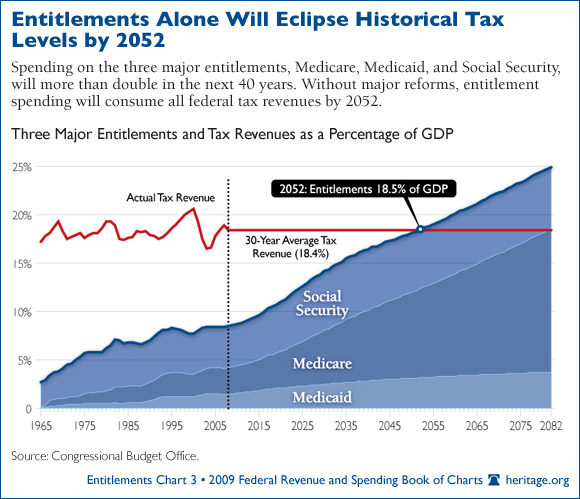
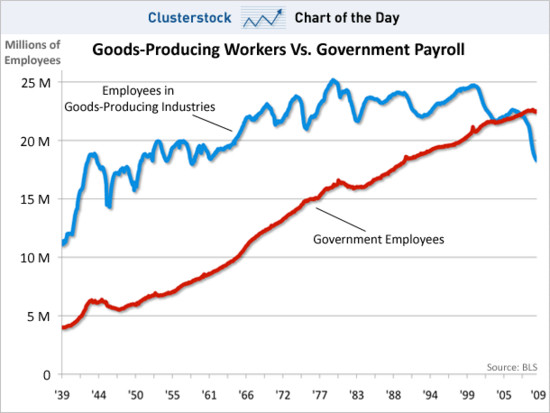
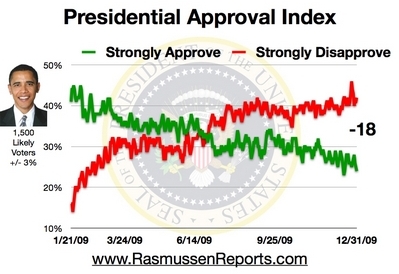
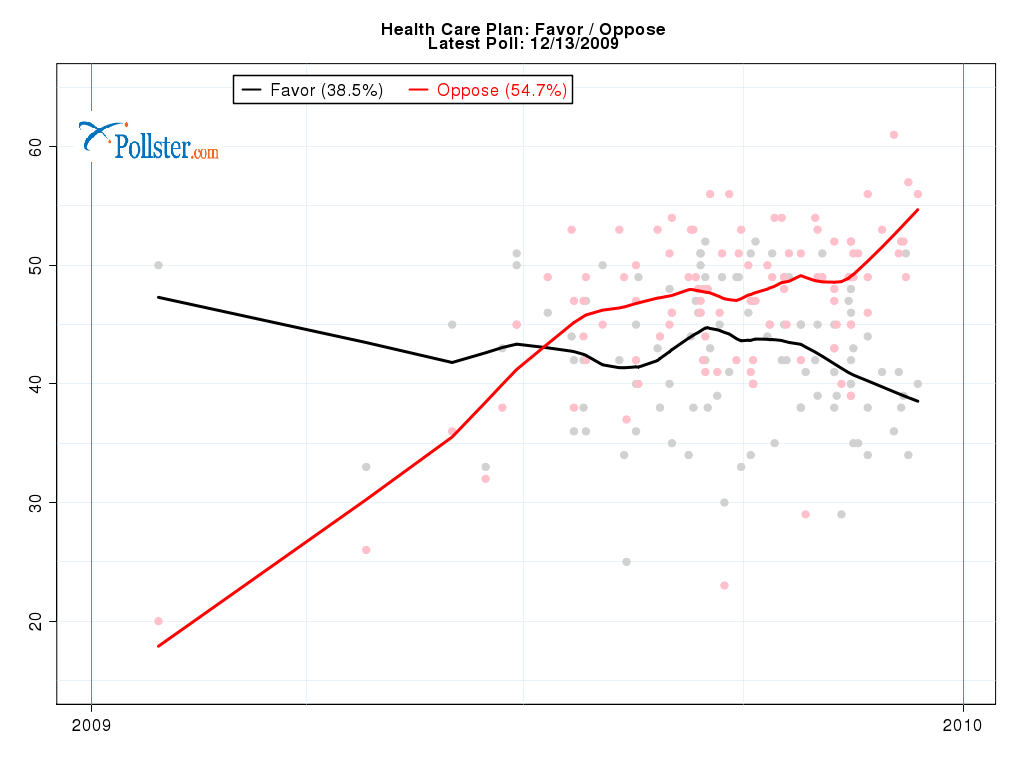
 Internet Scofflaw
You must be logged in to post a comment.