Jonah Goldberg points out that we are in the midst of the lousiest recovery on record:
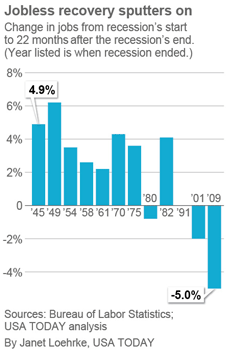
Okun’s Law says that recoveries should come with a drop in unemployment, but our last three recoveries have been jobless ones. The weakness of the current recovery explains some of it, but it can’t be a complete explanation. Is Okun’s Law dead? What did we do to it?
A little bit of googling found me an article from the New York Fed, written during the much-more-mild jobless recovery of 2001-2003. They found:
We advance the hypothesis that structural changes—permanent shifts in the distribution of workers throughout the economy—have contributed significantly to the sluggishness in the job market.
We find evidence of structural change in two features of the 2001 recession: the predominance of permanent job losses over temporary layoffs and the relocation of jobs from one industry to another. The data suggest that most of the jobs added during the recovery have been new positions in different firms and industries, not rehires. In our view, this shift to new jobs largely explains why the payroll numbers have been so slow to rise: Creating jobs takes longer than recalling workers to their old positions and is riskier in the current uncertain environment.
From a policy perspective, this suggests two things to me. First, there are a lot of reasons why the economy might be shifting from one industry to another, and there’s no way to stop that sort of trend (if we even wanted to). We should get it over with. What I mean by that is we should not be trying to prop up shrinking industries. We can’t do it in the long run, and our attempts serve only to push the adjustment process into recessions (reality sets in when times are tough).
Second, we should make it easier and less risky to create new jobs in new industries. That means encouraging investment and cutting regulation.
Unfortunately, our current administration is doing exactly the opposite of all the above.
 Internet Scofflaw
You must be logged in to post a comment.